


2023.08.09
About posthumous names
query_builder
2023/07/19
Seto Inland Sea
Ocean scatter
Nationwide
remains
Trader
family
Boarding
feel safe
Columbarium
correspondence
deceased
consultation
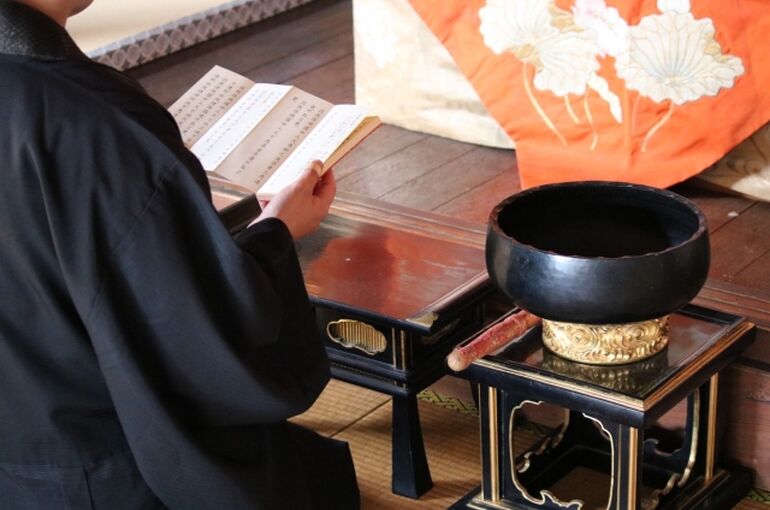
Thank you for visiting.
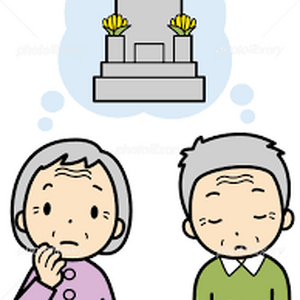
Have you ever heard the word “Kaimyo”?
Today, let me talk about the posthumous name.
What is a posthumous posthumous name?
Kaimyo is the new name of the deceased in the Buddhist world. "Kai" has the meaning of "precepts" and refers to precepts that should be observed in Buddhist practice. The posthumous name is a name that is given as a proof that you have learned the teachings of Buddhism and have promised to keep the precepts.
Reason for naming
In Buddhism, there is an idea that when a person dies, he or she departs for the world of Buddha. Therefore, it is customary to give posthumous posthumous names to the deceased so that they can be reborn in paradise by properly preparing themselves for entering the Buddhist priesthood. A posthumous posthumous name is a proof that you are recognized as a disciple of the Buddha. If you call a monk from a temple and hold a Buddhist-style funeral, you will most likely give a posthumous posthumous name.
history
It is said to date back to “Chinese Buddhism,” a combination of Buddhism, Taoism, and Confucianism. At this time, those who entered the priesthood were given during their lifetime after training. In Japan, it is transmitted at the same time as Buddhism. After that, when the parishioner system was established in the Edo period and the funerals of commoners were also conducted by priests, posthumous Buddhist names were given as proof that they were parishioners of the temple. The custom of posthumous posthumous posthumous Buddhist names is unique to Japan, even among Buddhist countries.
Difference between law name and law name
Some sects, such as the Jodo Shinshu sect, call it Homyo instead of Kaimyo, and Hokke Buddhist sects such as the Nichiren sect call it Hogo and always add the ``Nichigo''.
posthumous rank
It is worn under the posthumous name. Ranks are divided according to gender, age at death, contribution to temples and society, etc.
Male high order "Okoji" → "Koji" → "Zenjomon" → "Seishinshi" → "Shinshi"
In descending order of females: ``Qing big sister'' → ``Big sister'' → ``Zentei'' → ``Kiyonobu sister'' → ``Shinnee''
Do I have to wear a posthumous name?
In recent years, some people have doubts about this posthumous name system, and some people hold funerals under their secular name without using posthumous names due to financial problems. In most cases, you cannot enter the ossuary or grave of a temple, so you will have to enter a public or private ossuary or cemetery.
summary
Kaimyo is a name given to the deceased so that they can be guided to the Pure Land without hesitation. Since the method of giving a posthumous posthumous name is unique to each sect, you can tell the sect of the deceased by looking at the posthumous posthumous name. A posthumous posthumous name is not something that you put on yourself, but something that is bestowed upon you.
----------------------------------------------------------------------
Shimanami Memory
address: 114-9 Kamitoku Otsu, Imabari City, Ehime Prefecture
telephone number: 0898-47-3441
----------------------------------------------------------------------
NEW
-
-
2023.08.02legal affairs and leg...law and legal affairs Thank you for visiting. ...
-
2023.07.26About the memorial towerThank you for visiting. Today, let me talk abou...
-
2023.07.19About posthumous namesThank you for visiting. Have you ever heard the...
-
2023.07.12What the hell is the ...Thank you for visiting. Before I got a job at M...
-
2023.07.05history of graveshistory of graves In modern times, there are va...
-
2023.06.28What should I do with...What is shukatsu? What do you prepare from? Tha...
-
2023.06.21About prayer beadsThank you for visiting. My grandfather passed a...
-
2023.06.14About the five-ring t...Thank you for visiting. I joined the company in...
-
2023.02.07Ehime Graveyard | Wha...2023/2/4 Dear Ehime Prefecture, good morning. ...
-
2023.01.23What do the cucumbers...Hello! Thank you for visiting. I used illustra...
-
2023.01.16Oshima Stone in Imaba...Hello! Thank you for visiting. Have you ever ...
-
2023.01.11About visiting gravesHappy belated new year. Thank you for your cont...
-
2022.12.22Grave hunting in Imab...A cemetery is not only a place to store the rem...
-
2022.11.10Visiting a grave|The...hello. Shimanami memory, which is familiar with...
-
2022.11.10A blogger who publish...The homepage of the world's first completely ha...
-
2022.07.05Matsuyama City | Wher...hello. Shimanami Memory is familiar with comple...
-
2022.05.10Ehime Prefecture Tomb...What is the grave that I can't hear anymore? No...
-
2022.04.19Shimanami memory for ...Marine bone-cutting is a new form of offering t...
-
2022.04.19We have launched a ne...Thank you for visiting our blog. We have launch...


VIEW MORE
